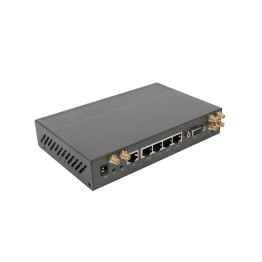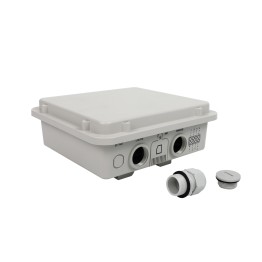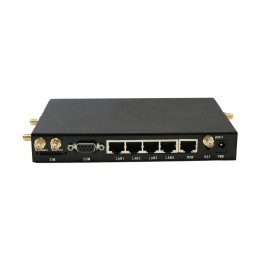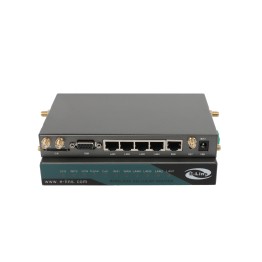


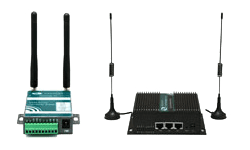
E-Lins 4G router with Ethernet is a compact industrial cellular router for M2M, IoT, remote access, and in-vehicle networking applications. It connects Ethernet devices to 2G, 3G, and 4G LTE networks through a built-in modem and SIM card slot, with available Wi-Fi, VPN, serial communication, digital I/O, GPS/GNSS, and multi-WAN functions. H685 Series configurations can be selected for regional LTE bands, Ethernet-port requirements, power input, interfaces, and project-specific OEM or ODM requirements for system integrators, equipment manufacturers, and industrial connectivity projects. Please provide the target country, carrier, required interfaces, and application scenario for configuration confirmation.

E-Lins 4G router with Ethernet solutions are designed for industrial IoT, M2M, remote access, and in-vehicle networking applications where wired devices require cellular connectivity. The H685 Series combines Ethernet networking with built-in cellular access and can be configured with Wi-Fi, VPN, serial communication, digital I/O, GPS/GNSS, remote management, and multi-WAN functions according to project requirements.
These routers can connect local equipment such as PLCs, RTUs, CCTV cameras, sensors, meters, controllers, industrial switches, computers, kiosks, vending machines, power-control equipment, and vehicle devices to a mobile network. Available functions and interfaces depend on the selected H685 model, cellular module, firmware version, and project configuration.
When selecting a 4G router with Ethernet, buyers should evaluate the connected equipment, cellular network requirements, installation environment, remote-management method, and required connection redundancy. The correct model is determined by the overall project network architecture rather than cellular speed alone.
A 4G router with Ethernet is commonly used when wired field equipment needs internet access, remote monitoring, private-network communication, or a backup connection without relying only on fixed broadband. The H685 Series is suitable for distributed deployments where local Ethernet devices need to communicate with a cloud platform, server, control center, or remote maintenance system.

The H685 Series combines cellular connectivity, Ethernet networking, and optional Wi-Fi functions for industrial communication projects. Depending on the selected configuration, it can use a SIM card to access 2G, 3G, and 4G LTE networks, connect to an Ethernet WAN source, and use Wi-Fi client connectivity as an additional network source.
For projects requiring connection continuity, the router supports configurable cellular, Ethernet WAN, and Wi-Fi client connection paths. A primary link and one or more backup links can be defined so that the router can switch to an available backup connection if the primary connection fails. Supported connection-management functions include failover, failback, WAN failure detection, auto-dial, keep-alive functions, LCP checking, ICMP checking, and a built-in watchdog.

For a failover deployment, a project can use a cellular SIM connection together with an xDSL line, Ethernet WAN connection, or Wi-Fi access point connected to the internet or a private network. When the configured primary connection is unavailable, the router can switch to a backup connection according to the selected failover rules. This configuration is useful for sites that require an alternative communication path for remote monitoring or control.
For load balancing and link bonding deployments, the H685 Series can use the embedded cellular module, RJ45 WAN connection, and Wi-Fi client connection together on supported configurations. Load balancing distributes traffic between available network interfaces based on configured rules. Link bonding can combine two or more links for redundancy or increased throughput, depending on the enabled function and network configuration. Actual results depend on the available carrier, WAN, Wi-Fi, and destination-network conditions.

The H685 Series is designed for industrial and embedded networking applications that require a compact router with a metal enclosure, installation flexibility, and protection features for electrical and field deployment conditions. The product information includes an alloy-metal case with an IP30 protection standard and support for vibration- and shock-related installation conditions.
Built-in protection features include transient-voltage protection, reverse-polarity protection, over-current protection, and over-voltage protection. The product can be used in industrial cabinets, equipment housings, remote field stations, vehicles, and other installations where power quality and physical installation conditions need to be considered.


The H685 Series uses a built-in industrial cellular modem and SIM card slot to provide direct wireless communication through compatible mobile networks. The cellular module, LTE category, supported network standards, and frequency-band version should be selected according to the destination country and carrier requirements.
In addition to Ethernet connectivity, the product information includes serial communication, digital I/O, console access, external antenna connections, optional GPS/GNSS, and Wi-Fi functions. These options allow the router to communicate with industrial controllers, meters, sensors, alarm systems, legacy serial devices, and other field equipment.


The H685 Series supports secure remote-access and private-network configurations through available VPN, routing, firewall, and authentication functions. Buyers should define the required network topology, required VPN protocol, remote server or headquarters environment, authentication method, and access-control policy before selecting the final configuration.

The H685 Series supports wide-range DC power input, passive PoE, and dual or tri power input configurations. These functions are intended for fixed industrial equipment, control cabinets, remote stations, and vehicle-related projects where a backup power path or different installation power source may be needed.
For vehicle applications, the provided product information includes reverse-polarity and transient-voltage protection according to ISO 7637-2, ignition sensing with automatic ON and time-delay OFF, and fuse requirements based on the installation voltage. The correct power version, PoE requirement, fuse rating, and wiring method should be confirmed for the final installation.

The H685 Series can be installed by desktop placement, wall mounting, or DIN-rail mounting. This installation flexibility supports use in industrial cabinets, equipment housings, remote stations, vehicles, and embedded communication systems. Buyers should confirm the available mounting accessory and installation dimensions for the selected configuration.

GPS/GNSS support is available for projects that require location information, route tracking, mobile asset management, or vehicle-related communication. The required GPS/GNSS function, antenna type, antenna position, and related application software should be confirmed according to the selected model and project design.

The H685 Series supports local and remote management through web GUI, API, CLI, SSH, Telnet, SMS, TR-069, SNMP, and the E-Lins Network Management System. Available management functions include local configuration, remote WAN management with access control, modem configuration, firmware update, data-usage monitoring, device alerts, diagnostics, profile backup, profile recovery, and remote maintenance functions.
Compatible E-Lins communication terminals can be connected to the E-Lins Network Management System for centralized monitoring, configuration, update, diagnosis, maintenance, and control across distributed locations. NMS availability, subscription requirements, supported device models, and the required management functions should be confirmed for each project.

E-Lins Communication Co., Ltd. provides OEM and ODM support for 4G router with Ethernet projects. Available customization depends on the selected H685 hardware platform, cellular module, destination market, order quantity, software requirements, and whether the project requires new hardware or firmware development.
New mechanical structures, non-standard interfaces, special firmware functions, additional carrier requirements, or project-specific certification requirements may require technical evaluation, prototype development, sample validation, and additional lead time.
E-Lins Communication Co., Ltd. develops and manufactures cellular networking products for M2M, IoT, industrial, commercial, and vehicle connectivity projects. The product range includes 4G and 5G industrial routers, cellular modems, Wi-Fi routers, industrial network switches, serial gateways, and control and communication devices.
For industrial 4G router with Ethernet applications, E-Lins Communication Co., Ltd. provides standard and project-based configurations that combine LTE connectivity with Ethernet networking, remote management, VPN, serial communication, digital I/O, Wi-Fi, GPS/GNSS, and different power-input options. Product selection should be based on the target network, deployment environment, connected equipment, and required project functions.
A 4G router with Ethernet connects local wired devices to a cellular network. It can be used for remote monitoring, internet access, private-network communication, and remote maintenance of equipment such as PLCs, cameras, meters, controllers, sensors, switches, kiosks, vending machines, and vehicle devices.
The provided H685 Series information lists cellular, WAN RJ45, and Wi-Fi client failover, failback, load balancing, and bandwidth link-bonding functions. The available connection modes depend on the selected configuration, firmware, and network design.
Yes. The listed VPN options include IPsec, PPTP, L2TP, GRE tunnel, OpenVPN option, DMVPN option, IPsec over L2TP, VPN pass-through, certificate support option, dynamic site-to-site VPN with NHRP, and VTI tunnel support. The required VPN protocol and topology should be confirmed before model selection.
The product information lists Ethernet, RS232, RS485, four digital I/O ports, console access, cellular antenna connections, Wi-Fi antenna connections, optional GPS antenna connection, and SIM card support. The available interfaces should be confirmed for the selected H685 model.
Yes. The product information includes in-vehicle application support, wide-range DC input, dual or tri power input, ignition sensing, reverse-polarity and transient-voltage protection, and vehicle-related fuse requirements. The exact power version and wiring method should be confirmed for the vehicle installation.
Please provide the target application, deployment country, mobile carrier or required LTE bands, expected quantity, Ethernet-port requirement, WAN backup requirement, Wi-Fi requirement, GPS/GNSS requirement, serial or DI/DO requirement, power-input range, mounting method, VPN protocol, remote-management requirement, and any logo, packaging, firmware, or documentation requirements.
For an accurate product recommendation, sample evaluation, or quotation, please provide the target application, deployment country, mobile carrier or required LTE bands, expected quantity, required Ethernet-port configuration, and required interfaces. Details regarding Wi-Fi, GPS/GNSS, RS232, RS485, DI/DO, VPN, remote management, power input, passive PoE, vehicle installation, mounting method, operating environment, product labeling, logo files, packaging, technical documentation, and sample requirements can also help confirm the appropriate configuration.
Specifications may vary by selected H685 model, cellular module, LTE category, regional frequency bands, firmware version, hardware interfaces, and optional functions.

|
Hardware |
|
|
CPU |
580 MHz |
|
RAM |
512 Mb DDR; optional up to 2 Gbit |
|
Flash |
128 M; optional up to 4 Gbit |
|
WAN |
|
|
Cellular Modem |
Integrated Category 12/9/6/4/3 LTE Advanced modem with DC-HSPA+, EVDO, 3G, and 2G failover, depending on the selected modem configuration |
|
Ethernet WAN |
One 10/100 Mbps Ethernet port for cable, DSL, T1, satellite, or Metro Ethernet |
|
Wi-Fi WAN |
Wi-Fi as WAN and Metro Wi-Fi; MIMO N 2.4 GHz; 802.11a/b/g/n |
|
WAN Functions |
Cellular 3G/4G; Wi-Fi as WAN; failover/failback; load balancing and bandwidth bonding; advanced modem failure check; IP passthrough; WAN ports support cellular, static IP, DHCP, and PPPoE with on-demand, keep-alive, schedule, manual, and standby options |
|
LAN |
|
|
LAN/WAN Ethernet Ports |
Five switchable 10/100 Mbps LAN/WAN Ethernet ports on specified configurations |
|
LAN Functions |
DHCP server, DHCP client, DHCP relay, DNS, DNS proxy, DDNS, UPnP, DMZ, multicast, multicast proxy, QoS with DSCP and priority queuing, MAC address filtering, and VLAN 802.1Q |
|
Wi-Fi |
|
|
Wi-Fi Standard |
802.11a/b/g/n |
|
Wi-Fi Mode |
Access point and client mode |
|
Wi-Fi Capacity |
Up to 64 connected devices |
|
Wi-Fi Security and Features |
WPA2 Enterprise, hotspot/captive portal, and SSID-based priority |
|
VPN and Routing |
|
|
VPN Protocols |
IPsec tunnel, NAT-T, transport modes, IPsec over L2TP, GRE tunnel, PPTP, L2TP, L2TP over IPsec, VPN pass-through, OpenVPN option, DMVPN option, certificate support option, multiple networks in a single tunnel, site-to-site dynamic VPN with NHRP, and VTI tunnel support |
|
VPN Encryption and Authentication |
IPsec hash options: MD5, SHA128, SHA256, SHA384, and SHA512; cipher options: AES, 3DES, and DES |
|
Routing Protocols |
OSPF, BGP, RIP, VRRP, virtual server, port forwarding, IP passthrough, NAT, NAT-less routing, routing rules, per-interface routing, multicast proxy, and IPv6 option |
|
Intelligent Routing Features |
UPnP, DMZ, virtual server/port forwarding, routing rules, wired or wireless WAN-to-LAN IP passthrough, route management, content filtering, IP filtering, website filtering, per-client web filtering, local DHCP server, DHCP client, DHCP relay, DNS, DNS proxy, Split DNS, PPTP/SIP/TFTP/FTP/IRC ALGs, MAC address filtering, Dynamic DNS, LAN/WAN affinity, VLAN 802.1Q, STP, multicast proxy, IP-setting overrides, and IPv6 option |
|
Management |
|
|
Management Interfaces |
E-Lins Enterprise Cloud Network Management System, web UI, API, CLI, SSH, Telnet, SMS control, TR-069, and SNMP v1, v2c, and v3 |
|
Management Functions |
Local web GUI; remote WAN web management with HTTP and HTTPS access control; CLI over SSH; SSH to serial; SSH to Telnet; API; one-button firmware upgrade; modem configuration, update, and management; modem data usage alerts; per-client data usage; custom AT scripting; SMS; and TR-069 |
|
NMS Option |
Optional Enterprise Cloud Network Management System as a cloud-enabled management and application platform with subscription-based service |
|
Monitoring and Diagnostics |
Data usage alerts for router and client devices, device alerts, advanced troubleshooting support, WAN/LAN/memory statistics, local and remote Syslog, local and remote profile backup and retrieval, and real-time clock through NTP with defined-hour update support |
|
Security |
|
|
Authentication |
RADIUS support, TACACS+ support, 802.1x authentication for Ethernet, certificate support, MAC address filtering, and advanced security mode with local user management only |
|
Firewall and Filtering |
ALGs, IP filtering, content filtering, website filtering, per-client web filtering, zone-based object firewall with host address by IP or FQDN, port, and MAC address; NAT, SPI, port blocking, service filtering for FTP, SMTP, HTTP, RPL, SNMP, DNS, ICMP, NNTP, POP3, and SSH; protocol filtering; WAN ping allow or ignore |
|
Optimized IP Communications |
Automated WAN failover/failback; WAN affinity and QoS for VoIP prioritization; advanced VPN connectivity to headquarters; SIP ALG and NAT for VoIP and unified communications through firewall; MAC address filtering; 802.1p/q for LAN QoS segmentation and VoIP treatment on LAN; private-network support through wired and 4G WAN |
|
Firmware and SMS |
|
|
Firmware Update |
Local update, remote update through LAN, Wi-Fi, and OTA WAN, plus NMS option |
|
SMS Functions |
SMS sending and receiving, WAN cellular APN configuration by SMS, SMS control and alarm; SMS or call control for online, offline, reboot, signal, and status monitoring; voice control is optional |
|
Digital I/O and Other Functions |
|
|
DI/DO |
Four digital input/output ports, 0 to 3.3 V; status monitoring through SMS and email; optional E-Lins switch-control board supports 5 to 40 VDC |
|
Other Functions |
Cellular and Wi-Fi MIMO support, DDNS, DNS proxy, optimized EMC design, local and remote Syslog, real-time clock, WAN/LAN/memory statistics, and local/remote profile backup and retrieval |
|
Redundancy and Load Balancing |
|
|
Redundancy Features |
Failover/failback with 4G and 3G; WAN failure detection; VRRP; auto-dial; keep-alive link; LCP and ICMP checks; built-in watchdog; three-line redundancy using cellular 3G/4G, RJ45 WAN with xDSL, DHCP, or fixed IP, and Wi-Fi client |
|
Load Balancing Options |
Ethernet rule selection and advanced load-balancing options including round robin, spillover, data usage, and rate, depending on configuration |
|
Ports |
|
|
Power Connection |
DC jack and 2-pin terminal block for wire connection |
|
Ethernet Ports |
Two Ethernet LAN/WAN ports on specified configurations; five switchable 10/100 Mbps LAN/WAN ports on specified configurations |
|
Cellular Antenna Connectors |
Two SMA connectors |
|
GPS Antenna Connector |
One SMA connector |
|
Wi-Fi Antenna Connectors |
Two SMA connectors |
|
Serial Connector |
RS232 / RS485 terminal socket |
|
Digital I/O Ports |
Four digital I/O ports through terminal socket |
|
Console Port |
Terminal socket |
|
Power |
|
|
Power Inputs |
Dual or tri power inputs with power failover |
|
PoE |
Power over Ethernet; 5 to 40 VDC default support; select 5 to 60 VDC version for 48 V PoE input |
|
DC Input Range |
5 to 40 VDC; 5 to 60 VDC optional; an inline fuse is required for vehicle installations |
|
Fuse Requirement |
Use a 3 A fuse for 9 to 24 VDC installations; use a 2.5 A fuse for installations above 24 VDC |
|
Vehicle Power Protection |
Reverse-polarity and transient-voltage protection according to ISO 7637-2; ignition sensing with automatic ON and time-delay OFF |
|
Power Consumption |
Idle: typical 100 mA at 12 VDC; maximum 500 mA at 12 VDC. Transmit/receive: typical 300 mA at 12 VDC; maximum 800 mA at 12 VDC. |
|
Recommended Power Adapter |
12 VDC, 2 A |
|
Indicators and SIM |
|
|
LED Indicators |
SYS x 1, VPN (IPsec) x 1, cellular signal x 1, cellular x 1, WAN x 1, LAN x 1, and Wi-Fi x 1 |
|
UIM/SIM Card Slot |
Supports 1.8 V and 3 V UIM/SIM cards |
|
Other Hardware |
Reset button and console port |
|
Mechanical and Environmental |
|
|
PCBA Size |
96 mm x 56 mm x 14 mm |
|
Size with Case |
100 mm x 60 mm x 21 mm |
|
Weight |
220 g without antenna; 330 g including antenna; 650 g including all accessories without package |
|
Operating Temperature |
-35 °C to +75 °C ambient air operating temperature for all models |
|
Storage Temperature |
-40 °C to +85 °C for all models |
|
Humidity |
5% to 95% operating, non-condensing; 5% to 95% storage, non-condensing |
|
Case |
Gray-black metal case; customization available |
|
Compatible Mobile Networks |
|
|
Supported Network Technologies |
4G LTE FDD/TDD; UMTS WCDMA including HSUPA, HSDPA, HSPA, HSPA+, and DC-HSPA+; GSM EDGE/GPRS; CDMA1x; CDMA2000 EVDO Rev 0, Rev A, and Rev B; TD-SCDMA and TD-LTE |
|
Cellular Frequency Bands |
|
|
4G FDD LTE |
Band 1: 2100 MHz; Band 2: 1900 MHz; Band 3: 1800 MHz; Band 4: AWS 1700/2100 MHz; Band 5: 850 MHz; Band 7: 2600 MHz; Band 8: 900 MHz; Band 9: 1700 MHz; Band 12: 700 MHz; Band 13: 700 MHz; Band 14: 700 MHz; Band 17: 700 MHz; Band 18: 850 MHz; Band 19: 800 MHz; Band 20: 800 MHz; Band 21: 1500 MHz; Band 25: 1900 MHz G Block; Band 26: 850 MHz; Band 28: 700 MHz; Band 29: 700 MHz SDL; Band 30: 2300 MHz; Band 31: 450 MHz; Band 32: 1500 MHz SDL; Band 66: 1700 MHz; Band 72: 450 MHz; and additional FDD bands depending on the selected modem |
|
4G TDD LTE |
Band 48: 3600 MHz CBRS; Band 46: 5200 MHz; Band 43: 3700 MHz; Band 42: 3500 MHz CBRS; Band 41: 2500/2600 MHz; Band 40: 2300 MHz; Band 39: 1900 MHz; Band 38: 2600 MHz; and additional TDD bands depending on the selected modem |
|
UMTS/HSPA/HSUPA/HSPA/HSPA+/DC-HSPA+ |
WCDMA/FDD: 2100 MHz Band 1; 1900 MHz Band 2; 1800 MHz Band 3; 1700 MHz/AWS Band 4; 850 MHz Band 5; 900 MHz Band 8; 800 MHz Band 6; 1800 MHz Band 9; 850 MHz Band 19 |
|
GSM |
Quad-band EGSM 850/900/1800/1900 MHz |
|
CDMA and EVDO |
CDMA1x/EVDO: 800/1900 MHz; 450 MHz optional |
|
TD-SCDMA |
2010 to 2025 MHz and 1880 to 1920 MHz |
|
Frequency Note |
Available cellular bands and frequencies depend on the selected modem module and regional version. Confirm detailed bands and frequencies with the local carrier before ordering. |
|
Peak Cellular Data Rates |
|
|
FDD LTE |
Downlink: 100 Mbps, 150 Mbps, 300 Mbps, 600 Mbps, or 1200 Mbps depending on LTE category and module. Uplink: 50 Mbps, 150 Mbps, 300 Mbps, or 600 Mbps depending on LTE category and module. |
|
TDD LTE |
150 Mbps downlink and 50 Mbps uplink |
|
DC-HSPA+ |
42 Mbps downlink and 5.76 Mbps uplink |
|
HSPA+ High |
21 Mbps downlink and 5.76 Mbps uplink |
|
HSPA+ Low |
14.4 Mbps downlink and 5.76 Mbps uplink |
|
HSUPA |
7.2 Mbps downlink and 5.76 Mbps uplink |
|
HSDPA |
7.2 Mbps downlink and 384 kbps uplink |
|
WCDMA/UMTS |
384 kbps downlink and 384 kbps uplink |
|
EDGE |
384 kbps downlink and 118 kbps uplink |
|
GPRS |
108 kbps downlink and 42.8 kbps uplink |
|
CDMA1x |
153.6 kbps downlink and 153.6 kbps uplink |
|
CDMA EVDO Rev B |
14.7 Mbps downlink and 5.4 Mbps uplink |
|
CDMA EVDO Rev A |
3.1 Mbps downlink and 2.4 Mbps uplink |
|
CDMA EVDO Rev 0 |
2.4 Mbps downlink and 153.6 kbps uplink |
|
TD-SCDMA |
2.8 Mbps |
|
Data Rate Note |
Listed data rates are peak values. Actual data rates depend on the selected modem, carrier network support, signal condition, network congestion, and deployment environment. |
|
Network and Band Lock |
|
|
Network and Band Lock Feature |
Default configuration is unlocked; network and band lock is optional where supported by the selected modem and firmware |
|
System and Package |
|
|
Minimum System Requirements |
Windows, Linux, Mac OS, iOS, Symbian, Android, and other operating systems that support a web browser |
|
Warranty |
One-year default warranty; optional extension up to five years maximum; other warranty services can be customized |
|
Package Contents |
H685 Series wireless 3G router, Ethernet cable, power adapter, cellular antenna, Wi-Fi antenna, and optional accessories according to selected features, including GPS antenna and serial cable |
Refer to the model definition below to identify the cellular modem, regional frequency-band version, and hardware configuration of the H685 Series.


 Networking
 EMBEDDED SYSTEMS
 Switches
 Wireless Solutions
 Industrial Computer
 Cloud Services